Saturday, March 30, 2013

Bijou Heads to Kickstarter

We have some timely news regarding the Matinee at the Bijou sequel series. The Bijou team is preparing to launch a Kickstarter campaign in early May for the purpose of funding the premiere season of 13 new episodes.

In the past the Bijou team has contemplated the potential for a Kickstarter campaign as a funding source but the timing was never quite right until now. Two recent stunning developments in video content creation and distribution are factors in our new strategy.

First is the wildly successful fan-driven Kickstarter campaign currently in play to bring back as a movie the popular UPN-CW cable series Veronica Mars (2004-2007) starring Kristen Bell. That campaign was launched March 13 and astonishingly achieved 100% of its 2 million dollar budget within 24 hours of posting.  Pledges have since doubled to 4.3 million and with a dozen days yet remaining in a 30-day Kickstarter campaign.

Second is the remarkable paradigm shift in video content distribution fostered by Netflix that began last month with the new House of Cards original series starring Kevin Spacey. All 13 new episodes were released at once by Netflix thus putting the consumer in charge of how and when they choose to watch any or all of the series.

Imagine all 13 episodes of each new Matinee at the Bijou season being available all at once and fans of the series not having to wait 3 months to see a particular matinee or a complete serial!

Our goal for the Kickstarter campaign is to produce the first 13 episodes and get them on PBS, TCM, Netflix or a similar national venue. That success will allow us to produce additional seasons with an ultimate goal to establish Matinee at the Bijou as a perpetual weekly show with a brand new fun-filled Matinee each and every week and with never a rerun in the pivotal time slot. Just like it used to be when you went to the movies.

The perpetual Matinee at the Bijou sequel series is being developed in collaboration with Ron Hall and Festival Films along with a distinguished coalition of classic film distributors and private collectors worldwide. This assures there will be no end to the number of immensely entertaining classic cartoons, shorts, serials and feature films we have available for the project.

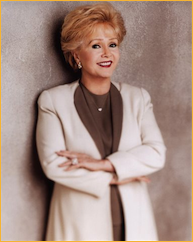
We are currently preparing a production schedule and calculating the budget for the premiere new season. We also need to affirm that Debbie Reynolds can remain aboard as host and that her schedule permits participation in what promises to be a successful and thrilling Kickstarter campaign.

Matinee at the Bijou is an ideal candidate for Kickstarter. Like Veronica Mars, Bijou has a large existing fan base numbering in the many millions. We have tried for some years to secure funding, but it has proven difficult in today's economy. Interest in vintage films has never been higher with the Turner Classic Movies'  upcoming TCM Film Festival April 25-28th in Hollywood, full houses at restoration showings, DVD releases of lost films and more.

The American movie matinee is an historic and vibrant part of our shared cultural history and richly deserves restoration, preservation and rediscovery. A Kickstarter campaign will provide fans of the original Matinee at the Bijou series in particular and film fans in general wide and perpetual access to these delightful cinematic treasures.

Here is an extended promo reel from the original series loaded with samples of the series' rich film content.
__________________________


Friday, December 21, 2012

Sentimental Journey: New York Penn Station in Film

As regular Bijou Blog visitors know, for the past six years the Bijou team in collaboration with Festival Films and other fellow travellers in the classic film industry have been seeking a formula for bringing Matinee at the Bijou back to PBS.

We announced last summer that we had at long last found the key and were putting the pieces together for the sequel series. Alas, the process has proven to be slow and tedious and our progress has remained in the development stage.

The encouraging news is that as the year winds down (and after a necessary hiatus in blog posts) behind-the-scenes activity here is flourishing and we're as busy as Grand Central Station. We expect to announce the plans for the series' return at some point in January. Stay tuned ...  

Meanwhile, speaking of Grand Central Station, Bijou film maven and pop culture enthusiast Victoria Balloon got to wondering about classic films that prominently feature New York Penn Station and shares with us  some interesting cinema history.   
__________________________________

Even as they entertained Americans, lifting them out of the Depression or uniting them in the face of war, classic films did something unintentional – they preserved landmarks of 20th century American cities on film.

Once an iconic destination and symbol of the restless pace of America, the soaring glass and steel of New York Penn Station exists now only in film.


In the mid 20th century, there were two common ways to get to New York City: by boat (either a trans-Atlantic cruise or a ferry from New Jersey that gave the traveler a moving view of the Statue of Liberty) or by train. If you came by train, unless you came in from upstate New York or Connecticut, chances are your destination was New York Penn Station.

In the 19th and 20th century America’s railways were networks of privately-owned lines. In 1925 the Pennsylvania Rail Road (PRR) was one of the largest, covering over 10,000 miles. Up until 1910, the New York terminus of the PRR line was at Exchange Place, New Jersey, and travelers took a ferry into Manhattan. But with the invention of electric motors it became possible to bring trains through a tunnel under the East River, and in 1910 the PRR opened their New York Pennsylvania Station.


All told there were nine “Pennsylvania” stations:, Philadelphia, Baltimore, Harrisburg, Pittsburgh, Cleveland, Cincinnati, Indiana, Newark (Hobart), and New York City. With some expansions and remodeling over the years, most of these Penn Stations are still in use as train and bus terminals. The Newark Penn Station, with its deco-styled hanging lamps and insignia of the Pennsylvania Rail Road in the waiting area, still looks much as it did when it was expanded in 1935 as part of a New Deal project.

The original New York Penn Station was designed by McKim, Mead, and White, the same firm that designed the original Madison Square Garden and the Metropolitan Museum of Art. It covered seven acres, with marble interiors based on the Roman Baths of Caracalla. The high vaulted glass and steel of the tracks and passenger terminal evoked images of London’s Crystal Palace.

Travel to and from Penn Station was so common that there are scores of movies featuring quick shots of Penn Station’s Seventh Avenue entrance, main waiting room, or the stairs that lead down to the tracks.


The four films highlighted here are notable for their more extended scenes of the station and its role in the plot, but as always, Hollywood is filled with illusions—two were filmed on location, but two were actually filmed on sound stages.

When Claudette Colbert decides the only thing she can do to help husband Joel McCrea in his business venture is a quick divorce, she naturally takes the train from Penn Station to Palm Beach, FL. Writer-Director Preston Sturges makes Palm Beach Story (1942) a screwball romp through high-society. Also starring Mary Astor and Rudy Vallee, this film is a Bijou favorite. The shots of the Seventh Avenue entrance are real, but those familiar with Penn Station’s clock can tell at a glance that this Paramount film was done on a soundstage. The gates to the tracks are very well done, but the metal paneling never existed in the station.

During World War II Penn Station saw its heaviest usage as soldiers were moved up the east coast and shipped off to Europe. It was only natural that soldier-on-furlough Robert Walker should meet Judy Garland at Penn Station in The Clock (1945). The shots of the main waiting room and arcade are beautiful—but fake. Filming in Penn Station during the war would have been impossible, so the station sets were recreated as lavishly as only MGM could make them.

However, when Robert Walker returns to Penn Station in Alfred Hitchcock’s Strangers on a Train (1951), it’s for the nefarious purpose of describing the perfect murder to Farley Granger. This time, Penn Station is the real deal. Despite Hitchcock’s sequential creativity (a taxi drops Granger off in one of the station's carriageways, but he’s shown going down the steps from the arcade into the main waiting room—implying he came not from the carriageway, but from the Seventh Avenue entrance) the result is excellent footage of all Penn Station’s iconic spaces.

Tom Ewell never would have succumbed to Marilyn Monroe and The Seven Year Itch (1955) if he hadn’t sent his wife and son away to Maine for the summer. Their journey to New England begins in Penn Station, with some of the best color footage of the concourse from the decade before its demise. It had to have been hot under that glass ceiling in the summertime—and it’s worth noting that the new Penn Station isn’t air conditioned, either.

After World War II, with changing demographics and the increase in car and air travel, the railroads fell on hard times. In 1961 New York City planned to demolish the station, and many New Yorkers never would have heard of the project were it not for an essay in the New York Times. Despite protests and pleas, the demolition of Penn Station went forward in 1963, and now Madison Square Garden sits atop the old site with the current Penn Station underneath.


However, it may be that the demolition of Penn saved Grand Central Station by making Americans realize the importance of saving historical architecture. A 1998 restoration in the ceiling of Grand Central revealed, under layers of nicotine and tobacco smoke, an astronomical ceiling mural in gold against a background of blue-green.

Still, the loss of New York Penn rankles many. There has been talk of rebuilding the current Penn Station by replacing Madison Square Garden with towers and turning the Farley Post Office (across Eighth Avenue) into a new train station, but the project is bogged down in red tape and a sagging economy. For now, NY Penn is an underground warren of corridors and half-floors laid out like an airline terminal. Only on film does the ceiling still soar and the light pour in.
_____________________

Here you can enjoy an inspired homage to Penn Station as reflected in film by artist and curator enthusiast David Galbraith who took the time to assemble a montage of footage from several classic films shot at Penn Station before it was demolished or at studio recreations.


Thursday, June 21, 2012

COMING SOON and Lost & Rare

Faithful visitors to the Bijou Blog and fellow-travelers in the classic film world are aware of our struggle to find a funding formula for a sequel Matinee at the Bijou series. We are thrilled to announce we have a breakthrough in this quest with a highly imaginative proposal on the table conceived by a veteran PBS insider. If successful, this idea will result in PBS stations nationwide being GIFTED with, at no cost whatsoever, a continuing series of original weekly Matinee at the Bijou shows! This innovative plan will serve to introduce America's cinematic heritage to entire new audiences and awaken nostalgia in those who fondly remember the original experience.

Our first choice for hosting a revival of Matinee at the Bijou has always been the incomparable Debbie Reynolds! A formal proposal for Ms. Reynolds' participation in this novel approach for Bijou's return is in the hands of her agent and we are awaiting the response prior to announcing further details. A positive outcome will reunite PBS with one of its most popular and successful series ever -- while adding a  beloved cinematic icon to the time-honored roster of PBS celebrity hosts.

Interest in vintage films has never been stronger! This is best demonstrated by TCM's ambitious commitment to putting classic movies back up on the big screen where they belong via their increasingly popular TCM Classic Film Festival held annually each spring in Hollywood; a winter TCM Classic Cruise; and now, traveling roadshow presentations with screenings each year in movie theaters across the country!

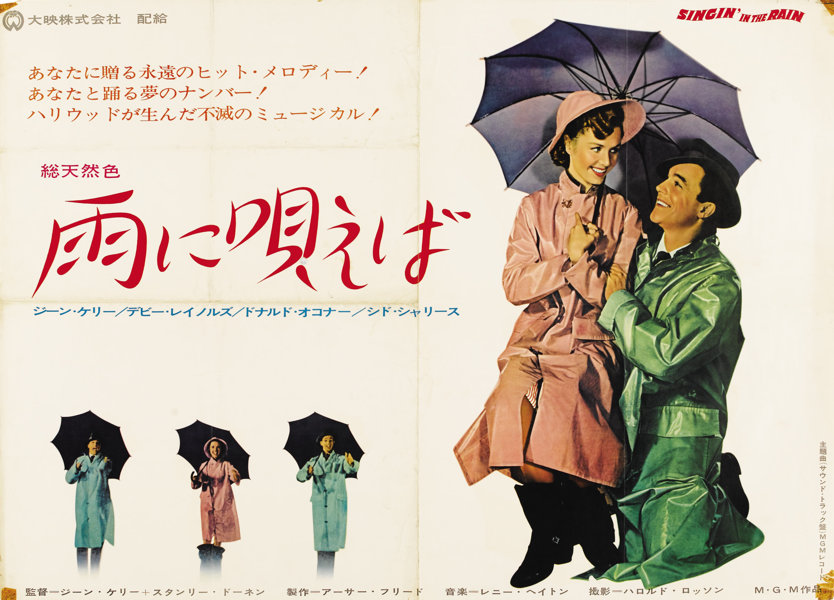
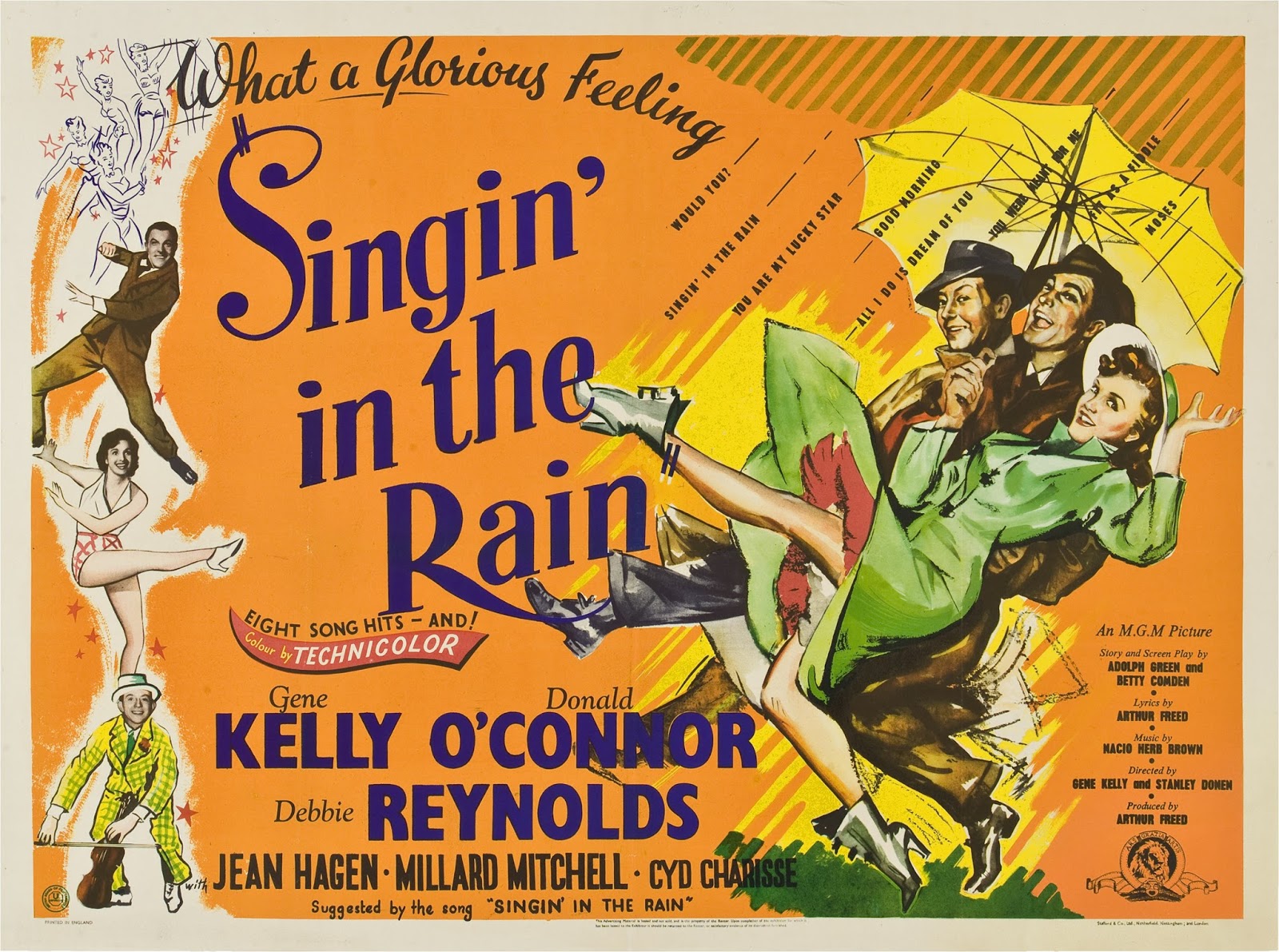
A special shout out from everyone here at Bijou goes to all involved in the special 60th anniversary screenings of Singin' in the Rain coming this July 12th to 475 screens from coast to coast, with a special onscreen Robert Osborne introduction and interview with Debbie Reynolds.


Meanwhile the Bijou Team remains committed to bringing back FREE to PBS stations nationwide a continuing Matinee at the Bijou classic film festival of our own, loaded with fabulous vintage cartoons, short subjects, cliffhanging serials and family-friendly feature films from the Golden Age of Hollywood. We  made this happen once before on PBS and with enormous success. Now, in collaboration with classic film industry professionals nationwide, we are poised for an even more successful second time around. Please stay tuned for further developments.
_____________


Festival Films' Lost & Rare DVD Series Debuts


Ron Hall and Festival Films have long been helping the Bijou Team locate an abundance of film content for the Matinee at the Bijou sequel series. In turn, Bijou is a participant in Festival Films' new DVD series Lost & Rare Film & TV Treasures. The recently released first two volumes of which have received a very encouraging response from media critics. In his review, Jef Burnam, Editor-in-Chief of Film Monthly highly recommends the premiere releases.


The Lost & Rare series is a brilliant concept for finding, restoring, thematically programming and  affordably distributing to the general public films that heretofore have been considered lost, unknown, extremely rare or near impossible to find.

Simultaneously with release of these first volumes, the Lost & Rare series is now undergoing a beta test phase prior to release of subsequent volumes. During this evaluation period producers are seeking answers to issues such as the suitable amount of content for future volumes -- 5 films, 10 films, more? Ideal price points once the volume of content is determined. What will be the ideal release pattern -- 2 volumes released monthly, quarterly? How best to tailor the series for educational markets.

Also during the beta test stage Ron and his colleagues are seeking to develop a creative partnership with an existing film archive that shares a similar mission, and exploring potential sponsorship branding opportunities and the potential for grants or in-kind help with film restoration work. Also, how the series might be adapted beyond the DVD format for television and/or online markets.

Most significantly, much of the Lost & Rare content Festival  Films has so far acquired for release this fall is truly stunning and certain to amaze classic film enthusiasts worldwide.

Here is a sneak peak at five remarkable film discoveries Coming Soon in a pair of Lost & Rare Film & TV Treasures  programs: Discoveries & Innovations and Primeval Television ...

Alan Ladd's first credited screen appearance and color film role in Unfinished Rainbows (1940).


The until now long-lost complete version of the 1922 Felix the Cat cartoon Felix in the Bone Age.


A little-known and long forgotten film industry gem called I.A.T.S.E., an imaginative historical documentary produced for the International Alliance of Theatrical and Stage Employees union's 50th anniversary in 1947.


A 1948 lost TV pilot created by veteran animator Jay Ward called The Comic Strips of Television that evolved into the first cartoon series produced directly for television and introduced the world to the iconic animated characters Crusader Rabbit and Dudley Do-right:


A restored original print of the condensed 2-reel version of the infamous 1913 exploitation film Inside of the White Slave Traffic with original music soundtrack scored for this version.


The first two volumes in the Lost & Rare Film & TV Treasures DVD series: Lost & Rare Television Pilots and Lost & Rare Sports Immortals are available from Movies Unlimited.

Here on the first screen you can watch scenes from films selected thus far for the upcoming Lost & Rare Discoveries and Innovations collection and on the second screen scenes from Lost & Rare Primeval Television. Further information on the series is available at the Lost & Rare website.


Here are scenes from content selected thus far for inclusion in the upcoming Lost & Rare Primeval Television collection:


Wednesday, April 25, 2012

Lost & Rare Television Pilots

When television entered the popular culture in the late 1940s,  many major Hollywood stars were cautioned by their agents to avoid taking part.

However, just as silent films were humbled by the advent of sound, the dominance of big screen movies would soon be humbled by the small screens that were suddenly populating America's living rooms. Once again, premature conclusions that "It's just a passing fad" gradually shifted to "How can I get in on this?" And just as suddenly, everything old became new again.

Once big screen names began embracing the new medium, even the most accomplished of stars like multiple Oscar-winner Bette Davis were required to audition for starring roles in what became known as the TV pilot. Still, due to the exigencies and fickleness of the evolving new industry, many major stars failed to make it past the pilot episode to become a series. Many of those curious and historic episodes are preserved in several esteemed national TV archives, while others exist only in the hands of private film collectors -- or may be lost forever.


Bijou executive producer and Festival Films founder Ron Hall is about to release some of these  gems in an an exciting new DVD series called Lost & Rare Film and Television Treasures. We asked Ron to elaborate on the subject of TV pilots and provide a sneak preview of his new Festival Films series. 
_____________

Most everyone knows the concept of the TV pilot -- a sample show produced since the dawn of television and still being made today (though the costs have increased a hundred fold). They were shown to networks, to sponsors and to test audiences to determine if they would be successful if turned into a series. Hundreds were made and many went on to become popular TV shows, while others changed drastically. For example, the Dick Van Dyke Show evolved from a sit-com pilot starring Carl Reiner. Some died a quiet death and never hit the airwaves and are beyond "forgotten" into the realm of "never heard of."

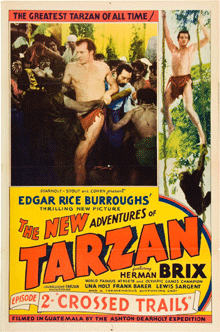
The most unique may be Kimbar of the Jungle (1949) starring muscleman Steve Reeves, since it is the first and only chapter of a planned 13-chapter adventure serial similar to the 1935 serial The New Adventures of Tarzan. Reeves plays a Tarzan clone in his only vine-swinging appearance. The 15 minute episode can be viewed on YouTube.

Unsold TV pilots made before 1964 are often in the public domain. The reasoning must have been, if they were not turned into a series, then what would have been the point of copyrighting and renewing them? The producers may have felt that way since they certainly proceeded to bury their losses and forget as fast as possible.


Many more pilots were made in the 1950s and 60s than today since the costs were far less. An intriguing one that many cinephiles want to see (just once!) is Here Comes Tobor from 1956. This is because Tobor is the robot from the 1954 sci-fi feature Tobor the Great and the world loves robots! The plot has America's top secret super robot being sent to investigate a mysterious signal from a missing atomic submarine. Sounds good but the execution of the pilot was only so-so and the show was not picked up. (still is from the TV pilot)

There must be hundreds of lost and obscure TV pilots out there!Recently I learned about a forgotten 1953 pilot called Johnny Nighthawk. Howard Duff (The Naked City, 1948) is the owner of a one-plane wildcat airline who is hired to pick up a rare antique in San Francisco and fly it back to Los Angeles. The flyboy soon meets a man who dies in his hotel room, a trigger-happy sexy dame (film legend Angela Lansbury), underworld hoodlums, the police and a priceless vase in Chinatown. It aired only once on Ford Television Theater and was titled The Ming Lama.

I also recently heard about a 1965 Bette Davis TV pilot created by Aaron Spelling called The Decorator that you can also enjoy on YouTube. The inimitable Miss Davis stars as a financially broke interior designer who fails to understand her precarious position. She sleeps to noon and saunters around her house smoking cigarettes as only Davis could smoke them.

The same google search turned up Bette's first TV pilot from 1958, that I also never heard of, called Paula. Bette had a different idea for her television pilot in 1958. Paula was to be a light comedy/drama about a successful Broadway theatrical agent (herself, of course), her agency and the eccentric clients they take on. The women wouldn't be played for laughs, they would do the playing. Sounds as if this might have been a real winner! Why Bette never attracted a sponsor for TV is a mystery perhaps only Peter falk's Columbo might well have solved.

Other major movie stars also made pilots that were not picked up. The Jane Powell Show, made in 1961, is a good example of a  lost pilot the world has never seen or scarcely heard of. Jane plays a prominent singer and nightclub entertainer who abandons film and  TV offers on a whim to marry a small town college professor and settle down to a campus life.

A very witty script and a lot of familiar Hollywood faces make it a shame this show didn't find a sponsor. The chemistry between Jane Powell and up-and-coming co-star Russell Johnson (the Professor on Gilligan's Island, 1964-67) is engaging. The concept for this 1961 romantic sex comedy just may have been inspired by the success of 1959s Pillow Talk that launched the popular series of Doris Day and Rock Hudson sex comedies. The bantor and bickering of the leads and the situations they encounter are similar, Jane even wears the same hair style as did Doris, and Russell in many scenes is a dead-ringer for Rock.

After locating rare and lost TV shows and movies for years I am joining forces with a number of private film collectors around the country to release the worthiest of titles under the Festival Films banner. The new series is called Lost & Rare: Film and TV Treasures. Volumes 1 and 2: "Television Pilots" and "Sports Immortals" will be available on May 15th from vendors soon to be announced or they may be ordered now at http://www.lostandrare.com/.

Meanwhile, please enjoy these sample clips from the Lost & Rare pilot episode for The Jane Powell Show.


Wednesday, February 29, 2012

Confessions of a Film Collector

This week for the first time in over 80 years American movie-goers are realizing that silence can indeed be golden and that classic films, whether silent or sound, can be priceless!

Today Bijou colleague and Festival Films founder Ron Hall  recollects how silent films first captured his imagination and led to a lifelong passion for collecting and sharing treasures from his vault. 
____________

The inspiring black and white "silent" movie The Artist just took the Academy Award for Best Picture of the Year.  I also loved Martin Scorsese's Hugo about the great pioneer of silent movies, Georges Melies.  Both films have caused me to reflect back on turning points in my life associated with silent and early sound movies.  A fascination with silent films especially as a child and teenager truly steered my life to a hobby that turned into a vocation that continues today.


Film collectors, buffs and Cinephiles recount many of these same experiences.  I have no memory of seeing any films before I was four, which is when the family moved from Texas to Wisconsin and settled in the small town of Deerfield, population 610, that had no movie theater!  So I grew up without Saturday Matinees or any weekly trips to the theater.

Being deprived of this experience in my early years only made me want to see more movies.  The few trips to Madison to see kiddie fare like a '25 Color Cartoon Festival' which were either Bugs Bunny/Roadrunners or Tom and Jerry/Droopy cartoons, were very special.  Of course we were taken to Disney films like revivals of Snow White (1937) and Song of the South (1946), plus first runs of Cinderella (1950), Lady and the Tramp (1955) and The Great Locomotive Chase (1956).

Free Movies in the Park 

Deerfield did host an outdoor movie series every summer to bring farmers into town for shopping.  This is a lost piece of small-town Americana I have never read about anywhere, but I was grateful to be part of it.  The shows did not start until dark around 9:00, but I hung around the traveling showman watching him set the screen, projector and speakers.  That first summer (1950) at age five I saw the first film I recall today -- Chapter #1 of the Universal serial Junior G-Men (1940) starring the Dead End Kids.


In the first chapter ending Billy Halop and pals are fighting in an elevator out of control.  It crashes!  I remember being terrified and covering my eyes.  I even remember the park bench and how close I sat to the screen.  Too close!  I really thought the Kids had died in my first exposure to the concept of death.

The Family 8mm Projector  

It was a Revere much like the one pictured here.  My father took home movies but in order to spice up a show starring us 3 kids he acquired a handful of Castle Films.  I recall The Three Little Bruins Get Into Mischief (1945), Andy Panda in Crazy House (1940) and the superb Mickey's Buzz Saw (actually 3 minutes from the 1934 The Dognapper) with Mickey Mouse, Donald Duck and Pegleg Pete being chased by a runaway buzz saw in a lumber mill.

Crazy House was a sound Technicolor cartoon but the home version was not only black and white but silent with inter-titles like real silent films.  I never knew at the time, but was simply captivated by the images of a fun house that runs amuck.

Castle Films  

My father had a few. Everyone's dad had a few in the late 1940s/early 50s.  One day I discovered them on sale in a department store bordering the state capitol building in Madison.  I haunted that display counter for years and one day actually purchased the 200 foot (about 3 minutes) version of The Bride of Frankenstein (1935) for something like $3.95.  I never could afford the deluxe 10 minute version at $8.95.   A few drops of film collecting fever in the blood can go a long ways, like a lifetime.

Famous Monsters of Filmland

This iconic magazine entered my life in late 1960 with Issue #10.  I had never seen many horror films up to then, but here was this kindly weird adult, Forrest J. Ackerman (FMF editor), telling all the kids that sci-fi, fantasy and horror movies were FUN and OK TO LIKE. (My parents forbade horror on some quasi-religious pagan grounds.)  I ordered the first nine back issues I had missed from Captain Company, who often did not deliver.  After losing a pile of quarters and dimes and still not getting Issue #4, I wrote to Forry about my dilemma.  He not only sent me one but autographed it as well, as shown here.


1950s Television  

Though missing first run movies in theaters, I devoured TV, saw my first mysteries, serials and cartoons there, Howdy Doody and the Mickey Mouse Club, Crusader Rabbit and later Rocky & Bullwinkle, all the TV western series, One Step Beyond, Maverick and on and on.  I also exhibited good taste at times and one love was Ernie Kovacs.

Silents Please 

By coincidence or fate, in addition to his many TV specials which often featured "silent" routines, Ernie Kovacs also hosted the 1960-61 series called Silents Please that presented cut down versions of silent movies.  The introduction and closing segments featured a quick shot of Lon Chaney as The Phantom of the Opera (1925) that particularly sparked my imagination a few years before I was able to actually see the film.

So every week I tuned in Ernie and "Silents," said "Please" and hoped my best to see more of the Phantom.  As it turns out from this Silents Please episode guide the show never ran The Phantom even though it was in the public domain!  Ernie sadly died in 1962, and there was only one 39-episode season of Silents Please.  In Madison about the same time we enjoyed a similar series The Toy That Grew Up out of the PBS affiliate in Chicago, WTTW -- but I can't find any info on the web about it.  I recall seeing Johnny Hines and Rod LaRoque half-hour abridgements.

In college at the University of Wisconsin, Madison (1964-1968) I attended a packed auditorium showing of When Comedy Was King (1960) in which the entire room convulsed with laughter for 75 minutes.

They also had occasional outdoor silent screenings of Laurel and Hardy shorts with live organ accompaniment.   I met Harold Lloyd when he came to the campus testing his compilation film The Funny Side of Life. (1963)   It contained most of The Freshmen (1925) and was a huge hit with the young audience.  At the reception was pioneer producer and Wisconsin resident Harry Aitken, now in his mid-90s, who had co-founded Triangle Film Corporation in 1915 with his brother Roy.  The most gracious Harold said, "You know, Mr. Aitken, I always wanted to meet you because I started my career working for your company but never got the chance until today." 

Jay Ward's Fractured Flickers introduced more mesmerizing snippets of Silents like Stan Laurel as "Dr. Pyckle" in Dr. Pykle & Mr. Pryde (1925) and the robot in Harry Houdini's Master Mystery (1920).

Blackhawk Films  

Somehow I heard about Blackhawk films during this period and traded in some old 8mm cartoons for my first Laurel and Hardy 8mm -- Leave 'Em Laughing (1928). 

This started my hobby as a film collector and I had already acquired Metropolis (1927) and Phantom from Griggs Moviedrome while still in college.  Then one day the Blackhawk Bulletin mentioned a tiny publication called "The 8mm Collector."  Sam Rubin started the paper in 1962 to find silent movies to watch and also other collectors.  I must have gotten my first issue in 1967 since I ordered a dozen or more of the early issues.


The early history of The 8mm Collector is recounted at the Cinecon Website:

The Society for Cinephiles, Ltd, was established in 1965 by Tom Seller, an avid reader of The 8mm Collector magazine, and Cinecon 1 was sponsored by Samuel K. Rubin, publisher of The 8mm Collector, in Indiana, Pennsylvania.  It was a small affair with only a handful of die hard film fans. They gathered in a small room at the local Holiday Inn and showed each other 8mm silent films from their personal collections.  This was 1965 before videos and DVDs, a time when, if you wanted to see your favorite old film, you had to wait until it turned up on TV or else you had to buy a projector and start your own film collection in 8mm or 16mm.

The following year (1966) another cinephile, Clark Wilkinson, hosted the show in Baraboo WI and Cinecon officially became an annual event.  For the next several years the Cinecon moved from city to city as a sort of moveable cinematic feast.  Today, the fanzine 8mm Collector is known as the respected Classic Images magazine, and since 1990 Cinecon has made its home in the Los Angeles area.


Ironically, in 1966 I was a 20-year-old sophomore in Madison, Wisconsin, and Baraboo was less than an hour drive away.  I could easily have attended Cinecon 2.  I saw a newspaper article after it was over but did not know about the event in advance.  In fact 17-year-old high school student Leonard Maltin flew in for the event.  I could also have attended Cinecon 3 in Chicago the following year with guest Colleen Moore but was again unaware.  I did make it to Cinecon 4 in Hollywood over Labor Day in 1968 where I roomed with Leonard on his very first trip to Hollywood and also with an adult -- Bud LeMaster -- who wrote for The 8mm Collector and who I had met in St. Louis that summer.

Wanting to see as many silent films as possible, then to own them and finally to share them with others led to attending Cinecons from 1968 on, running The Xanadu Film Festival in Minneapolis 1971-1974, meeting my future wife Chris, making friends with film dealers, fans and collectors, and eventually starting Festival Films in 1976.


Meeting Chris, who came to the film society to make audio tapes of Marx Brothers films, stands above all else.  Chris also loved Ernie Kovacs, whose Silents Please helped lure me into the hobby of collecting old movies that brought us together ten years later.
___________________________

So many of these films are at last available, renovated and uncut, over at Movies Unlimited and Alpha Video. Here is the inspirational opening to Silents Please that some may recall: